8 Ways to Double Your Gym’s Space Efficiency
When I was involved in the design of a mall gym, I discovered a shocking problem: their space waste was very serious. Many pieces of equipment were almost idle and collecting dust in corners. Later, we completely helped them change the situation through a reasonable layout.
Contents
- 8 Ways to Double Your Gym’s Space Efficiency
- 1.Multi-functional Core Training Area
- 2.Wall Storage System: The Heavily Underestimated “Hidden Space”
- 3.Flexible Open Training Area
- 4.Modular & Movable Equipment
- 5.Optimize Flow: The Hidden Key Determining Experience
- 6.Look Up for Space: Vertical Layout
- 7.Clear Zoning by Training Type, Not Mixed Together
- 8.Use 3D Planning Tools to Avoid Expensive Mistakes Early
- Conclusion: A Good Gym is Not Bigger, but Smarter
At the same time, that design made me realize that wasting space in a gym is even more terrible than wasting equipment.
Actually, the equipment in that venue was not bad, and even some of the best, but their layout was chaotic—large equipment was crowded together, and the aisles were narrow. The result was:
Members felt the aisles and other areas were crowded.
Coaches found it difficult to lead classes.
The utilization rate of most high-value equipment was extremely low.
After our redesign and planning, the efficiency of using the same area almost doubled.
Since then, I have participated in various types of fitness space designs: commercial gyms, school gymnasiums, hotel fitness areas, and even high-end private training studios. In these designs, I have accumulated a set of space layout logic that can truly be implemented, which you will learn about in detail in this article.
Below are the 8 layout strategies shared, all verified by real projects, hoping to help you create greater utilization in a limited space.
1.Multi-functional Core Training Area
If I were to start with one place that saves the most space, the multi-functional training area would undoubtedly be first.
By using equipment that integrates multiple training movements into one machine, you can cover more training needs with less floor space. At this time, choosing a reliable manufacturer of multi-functional fitness equipment is particularly important because they focus on developing products that integrate multiple exercise methods into a single space-saving unit. Inpek is very suitable for such products, which is especially useful for small gyms that want to provide diverse exercise options.
We often suggest to customers:
Use integrated training racks + multi-functional cable systems to replace multiple single-function machines to save more space.
Core advantages:
Small footprint without losing multi-functionality and durability.
The training flow is more concentrated; from upper body pressing to lower body lunges, all movements can be completed at one training station.
Less likely to be congested during peak periods.
2.Wall Storage System: The Heavily Underestimated “Hidden Space”
In fact, the floor of many gyms is not really insufficient; it is just occupied by messy equipment.
So, one of the most common things we do in project upgrades and renovations is: “invite” the equipment from the ground to the wall.
The value of wall storage:
It can release a large amount of floor space.
Makes the training area cleaner and look more professional.
Greatly reduces the risk of tripping and collisions.
Common efficient solutions include:
Barbell wall racks
Kettlebell / dumbbell wall mounts
Pegboard systems (resistance bands, jump ropes, etc.)
In INPEK’s space design solutions, storage has always been an important part, not an after-the-fact remedy.
3.Flexible Open Training Area
The more fixed equipment, the more crowded the space. A truly efficient gym must have an open area that can change its purpose at any time.
This type of area can switch purposes multiple times within a day according to different needs:
Morning: Stretching / Rehabilitation
Afternoon: Private Training
Evening: Small group classes or functional training
Common key configurations for such areas need:
Movable training mats
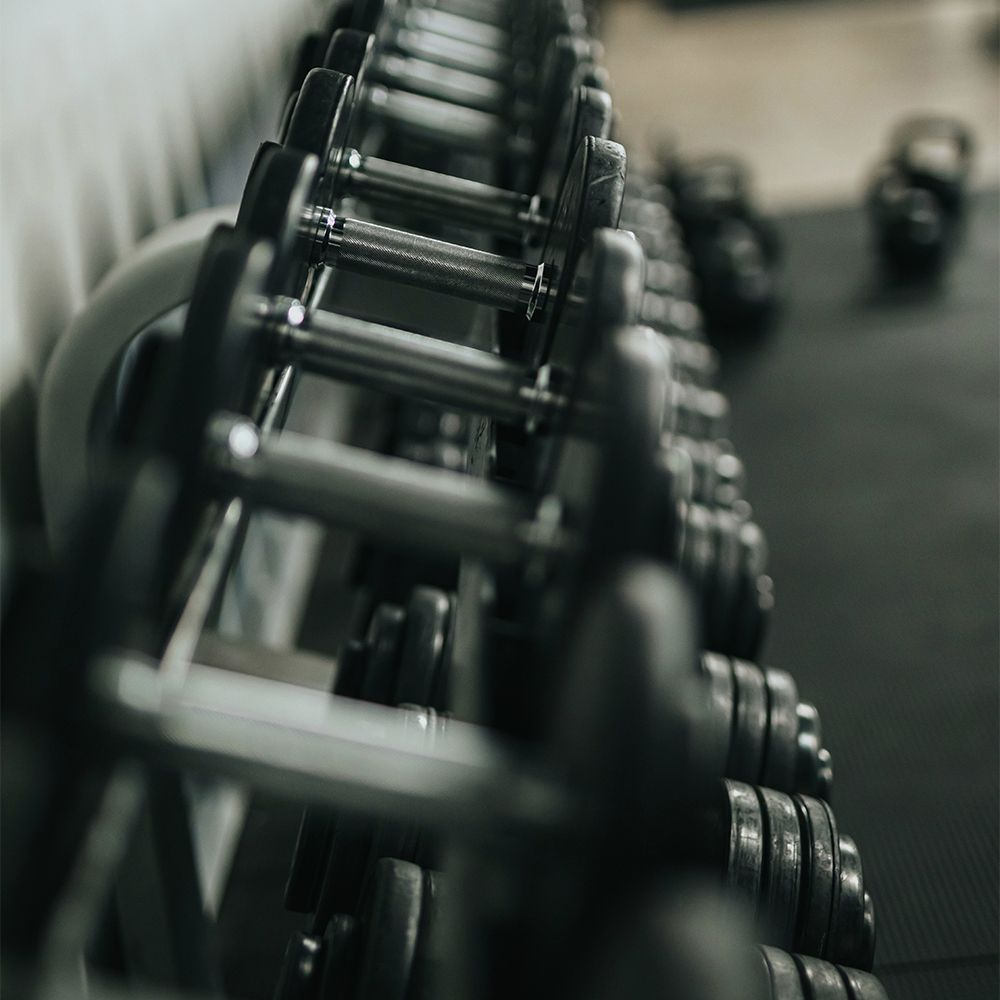
Lightweight free weights
Nearby but inconspicuous storage points
4.Modular & Movable Equipment
No matter what kind of gym it is, if the layout is never adjusted, its development will definitely be limited quickly.
The value of modular and movable equipment lies in:
Being able to quickly adapt to different courses and needs.
Better handling peak/off-peak time periods.
Reducing long-term space waste.
Items that performed very well and had higher usage rates in actual projects include:
Movable training racks
Adjustable training benches
Stackable training boxes
This equipment gives the gym a stronger “adaptability” rather than being limited by a fixed layout.
5.Optimize Flow: The Hidden Key Determining Experience
The reason many gyms look uncomfortable is often not due to the equipment, but the people—specifically, how people walk.
A good and reasonable space layout will ensure people:
Do not need to take detours.
Do not need to wait for a position.
Will not interfere with each other.
In design upgrade projects, I follow a basic principle:
Maintain a reasonable passage distance between equipment.
Naturally group areas with the same training attributes.
High-frequency areas should have clear sightlines and direct paths.
6.Look Up for Space: Vertical Layout
Many gyms and sports centers often only stare at the floor plan but ignore the height.
If the ceiling height allows, vertical layout can greatly improve space value:
Mezzanine cardio area
High-level storage walls
Suspension training systems
I once created almost an entire training area in a venue with a small floor area through this method. Its actual space did not get bigger, but the utilization and function doubled.
7.Clear Zoning by Training Type, Not Mixed Together
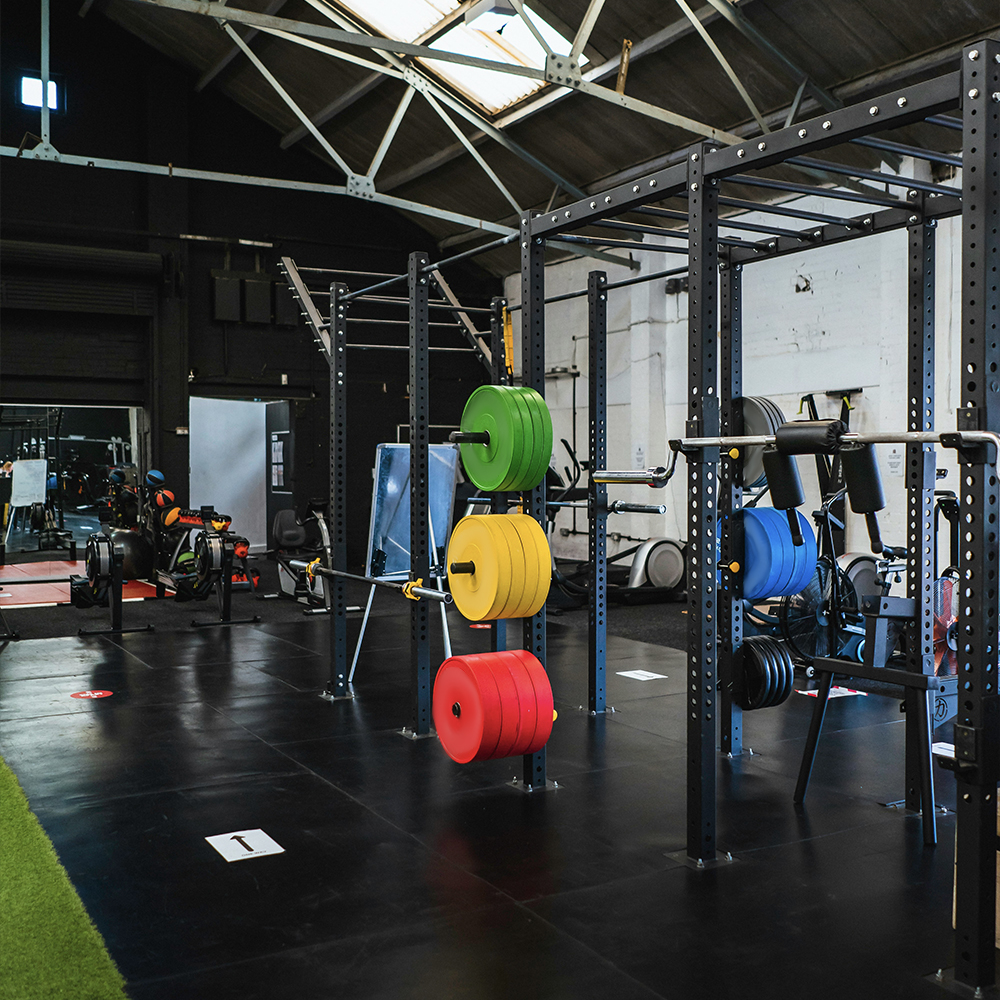
When all training is mixed in one area, chaos is almost inevitable.
Clear zoning allows members to:
Easier to enter their “state.”
Reduce interference.
Improve the sense of security.
Effective zoning methods include:
Different floor materials
Lighting differences
Visual identification
Let people understand at a glance.
8.Use 3D Planning Tools to Avoid Expensive Mistakes Early
One of the most wasteful things when building a gym includes: spending a lot of money to buy equipment only to find it doesn’t fit or is not easy to use.
In most projects, I almost always use 3D layout tools to simulate before construction:
Equipment placement
Personnel flow
Safety distances
The benefits of doing this are direct:
Avoid rework.
Reduce decision-making risks.
Allow everyone to have a consensus on the final effect.
Here are some very practical smart 3D planning tools: RoomSketcher: Great for gyms that want to easily drag and drop equipment when testing placement in 2D and 3D views. Ecdesign: Provides more advanced layout planning with real equipment libraries and realistic walkthrough functions. Planner 5D: A user-friendly tool that is surprisingly useful for small gyms in visualizing personnel flow and lighting.
Conclusion: A Good Gym is Not Bigger, but Smarter
The gym I mentioned earlier has changed from chaos to a space with high utilization and a good member experience.
What changed it was not a miracle, but correct layout choices.
If you are:
Planning a new gym
Renovating an existing space
Or hoping to increase value in a limited area
Then, these 8 strategies will definitely bring you some help.
INPEK does not just produce fitness equipment; we care more about: How equipment truly integrates into the space. How the space serves the training.
If you want your gym to use less space and do more, welcome to contact us and let’s make layout a truly professional matter.