Private Fitness Studio vs. Commercial Gym: Which One is Better for You from a Real Operational Perspective?
If you are about to enter the fitness industry, or have been working in this field for a while, you have likely thought about this question:
Should I start a private fitness studio first, or invest directly in a commercial gym?
Quick Comparison Chart
Before diving into the details, let’s take a quick look at the differences between private fitness studios and commercial gyms in key areas. This overview will help you determine which model best aligns with your goals before exploring each factor in depth.
Contents
- Private Fitness Studio vs. Commercial Gym: Which One is Better for You from a Real Operational Perspective?
- Quick Comparison Chart
- I. What kind of person is more suitable for a private fitness studio?
- II. What kind of business goals are suitable for a commercial gym?
- III. Space and Equipment: “How you use it” every day is more important than “What you bought”
- IV. Maintenance and Management: Many people underestimate this point
- V. Startup Costs and Cash Flow Pressure: How big is the difference?
- VI. Atmosphere and Customer Experience determine what kind of people you keep
- VII. Compliance and Safety are the bottom line for long-term operation
- VIII. Before making a decision, answer these 3 questions for yourselfI
- X. Conclusion: Choose the right model, and many problems will naturally decrease
| Comparison Dimension | Private Fitness Studio | Commercial Gym |
| Core Positioning | Small and refined, focus on service depth | Large scale, focus on coverage and branding |
| Typical Operator | Personal trainers, coaching partners, small-team entrepreneurs | Investors, chain brands, large-scale operators |
| Site Scale | Approx. 500–2,000 sq. ft. | Usually 5,000 sq. ft. and above |
| Target Clients | Clients seeking privacy and professional guidance | Members seeking convenience, variety, and social atmosphere |
| Client Relationship | High stickiness, strong trust, long-term retention | Relatively weak relationship, dependent on experience and price |
| Equipment Logic | Few but refined, emphasizing high utilization and flexibility | Full variety, covering different training levels |
| Equipment Intensity | Moderate, usage frequency is controllable | High intensity, 24/7 heavy usage |
| Maintenance Difficulty | Low, problems are easy to find and handle | High, requires systematic maintenance and personnel support |
| Startup Cost | Relatively low, can be invested in stages | High initial investment, greater financial pressure |
| Cash Flow Pressure | Small, easier to achieve balance early on | Large, highly dependent on member growth |
| Management Complexity | Low, most tasks can be handled personally | High, involves personnel, processes, and systems |
| Operational Focus | Service quality, reputation, repurchase rate | Membership scale, renewal rate, operational efficiency |
| Space Flexibility | High, can quickly adjust layout and training methods | Low, high cost of modification |
| Gym Atmosphere | Quiet, focused, goal-oriented | Active, strong social aspect, high energy |
| Expansion Method | Steady growth, higher difficulty to replicate | Easy to replicate, suitable for brand expansion |
| Main Risks | Over-reliance on personal client sources | Loss of cost control, inadequate management |
| Long-term Goal | Building a stable, high-reputation small business | Building a brand and achieving scale growth |
| Equipment Focus | Durable, practical, high space efficiency | Strong stability, low maintenance cost, commercial-grade |
| Recommended Strategy | Curated core strength and functional equipment | Mature commercial brands, such as INPEK Strength |
This choice may seem like a difference in “scale size,” but what truly determines success or failure is your goal, your financial endurance, and how much energy you are willing to put into daily management.
In the process of cooperating with different types of gym owners, we have found that:
Many cases of difficult operation in the later stages are not because the market is bad, but because the wrong model was chosen at the very beginning.
Below, we will not start from theory, but from a real operational perspective to break down these two models.
I. What kind of person is more suitable for a private fitness studio?
The core of a private fitness studio has never been “small space,” but “depth of service.”
These types of studios usually have a small area, but the courses are more focused, and the relationship between clients and coaches is closer. The success of many studios is not because of a high number of members, but because the value per client is high and the retention time is long.
From a practical point of view, private fitness studios are more suitable for:
-
Coaches who already have a certain client base.
-
Entrepreneurs who want to control risk and expand gradually.
-
People who attach more importance to training results and reputation.
In this model, what you face every day are familiar clients and a controllable pace, rather than continuous pressure for customer traffic.
II. What kind of business goals are suitable for a commercial gym?
The commercial gym takes a completely different path.
It emphasizes scale, coverage, and diversified services, usually including a strength area, cardio area, group class area, and complete supporting facilities.
The advantage of this model is: as long as it is operated properly, the growth space is larger.
But at the same time, it also means:
-
Higher initial investment.
-
More complex personnel management.
-
Higher degree of dependence on systems and processes.
Commercial gyms are more suitable for those who want to build a brand, expand influence, and have long-term investment capabilities.
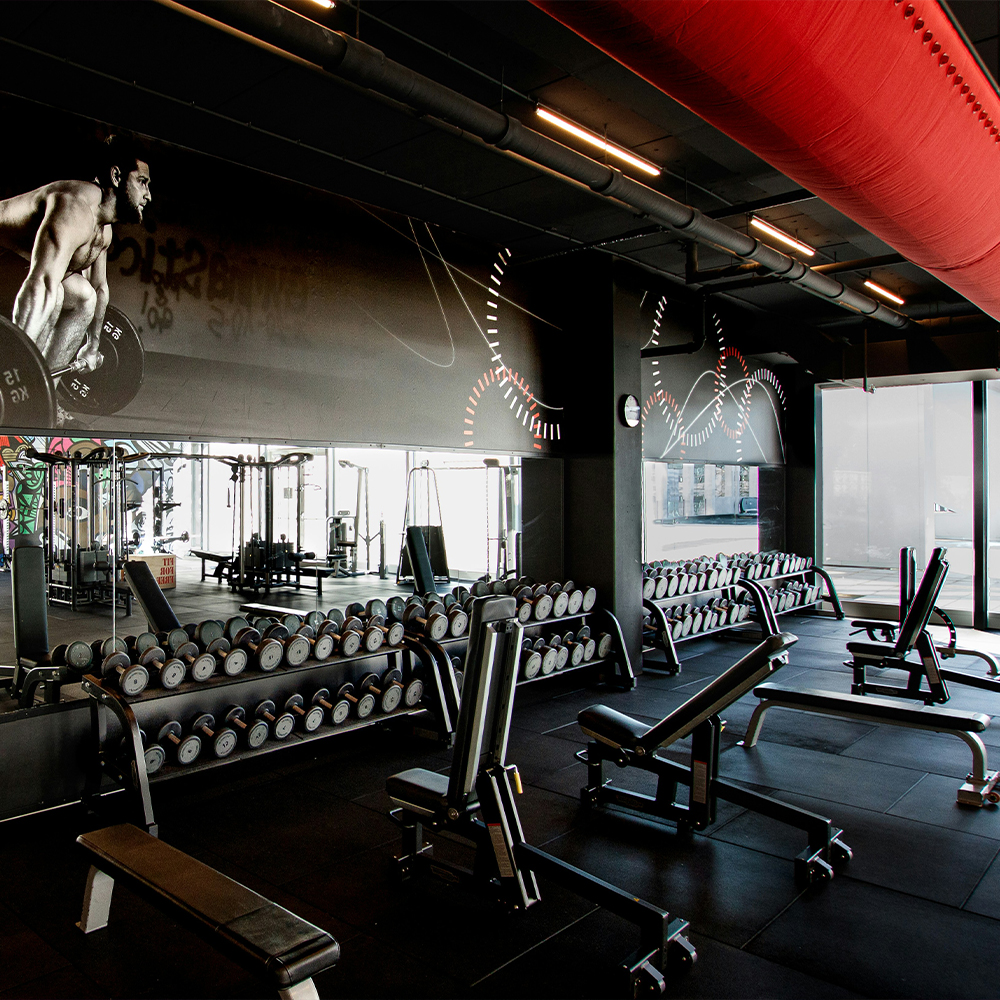
III. Space and Equipment: “How you use it” every day is more important than “What you bought”
The realistic logic of private fitness studios
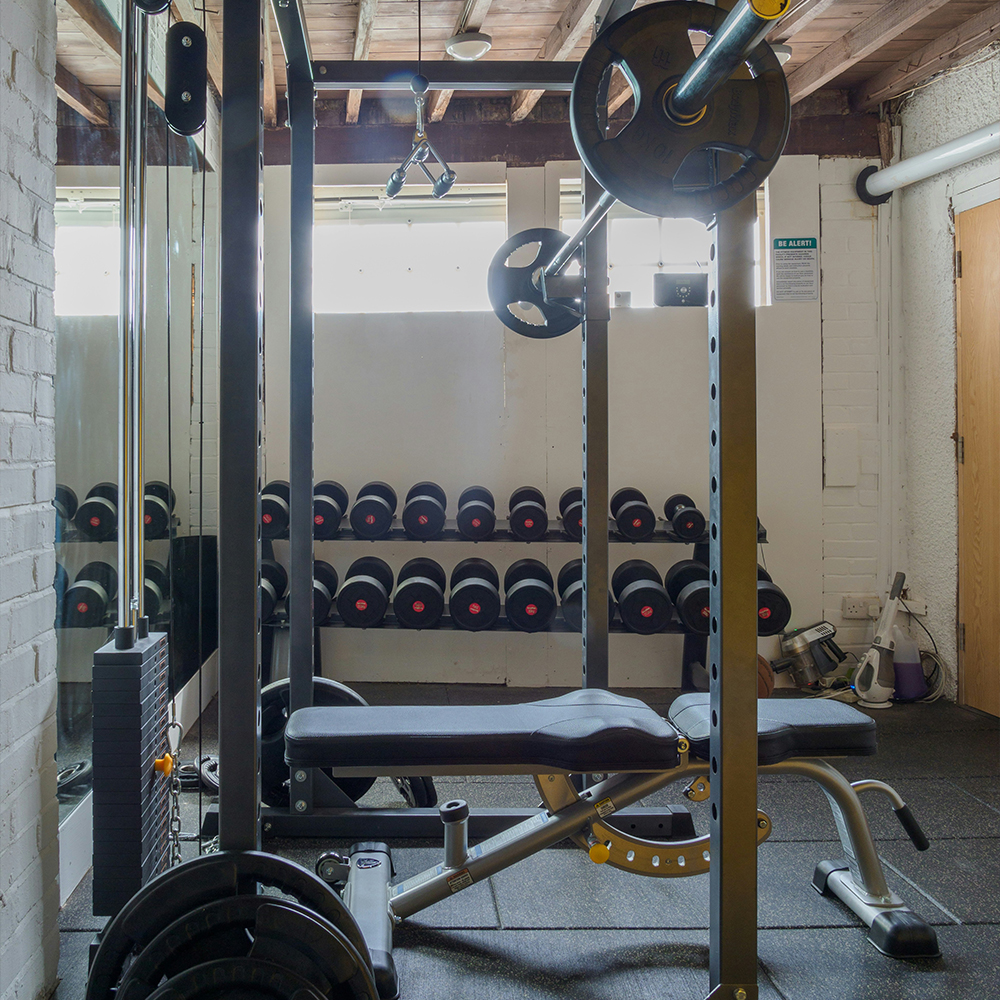
Most private studios are concentrated between 500–2,000 sq. ft.
In such a space, whether every piece of equipment is handy and frequently used will be infinitely magnified.
Therefore, equipment selection usually follows one principle:
Better to have fewer, but they must be durable, practical, and have a high utilization rate.
Common configurations include:
-
Squat racks or multi-functional power racks.
-
Flexible combinations of training accessories.
-
The clearer the spatial layout, the more the training efficiency can be improved.
The equipment mindset of commercial gyms
Commercial gyms face members with different levels and different goals; therefore, the equipment configuration must be more comprehensive.
This is not just a matter of “buying a few more machines,” but:
-
How different areas are distributed.
-
Whether it is prone to congestion during peak hours.
-
Whether the equipment can withstand high-frequency use.
-
In the long run, the stability and maintenance cost of the equipment are often more important than the purchase price.
IV. Maintenance and Management: Many people underestimate this point
Equipment maintenance is the link in gym management that is most easily overlooked, yet most likely to “have problems.”
Private Fitness Studio
-
Small number of equipment.
-
Usage status is clear.
-
Problems are easier to detect in advance.
-
Much of the maintenance in a studio can even be completed by the operator themselves, which makes the overall operation more controllable.
Commercial Gym
-
High frequency of equipment use.
-
Needs a fixed inspection cycle.
-
Often relies on dedicated personnel or outsourcing teams.
-
Once maintenance is not in place, it affects not only the equipment’s lifespan but also the member experience.
V. Startup Costs and Cash Flow Pressure: How big is the difference?
From a realistic perspective, this is often the decisive factor.
Private Fitness Studio
-
Initial investment is relatively controllable.
-
Can optimize while operating.
-
Easier to achieve cash flow balance in the early stages.
-
This is also why many experienced coaches choose to start with a studio.
Commercial Gym
-
Costs for renovation, equipment, and personnel are concentrated.
-
Longer payback period.
-
Higher requirements for member growth speed.
-
If the early planning is not clear, it is easy to be forced to compromise service quality under pressure.
VI. Atmosphere and Customer Experience determine what kind of people you keep
The atmosphere of a gym is actually silently screening customers.
Private fitness studios are usually quieter and more focused, suitable for those with clear goals who wish to obtain guidance.
Commercial gyms are more energetic, with stronger social attributes, suitable for members who like diverse choices and a group atmosphere.
No atmosphere is “better,” only whether it is consistent with your positioning.
VII. Compliance and Safety are the bottom line for long-term operation
Regardless of size, gyms must attach importance to compliance issues.
-
Basic business license and insurance.
-
Safe flooring and equipment stability.
-
Commercial-grade equipment that meets standards.
-
Many mature gyms choose equipment suppliers like INPEK Strength that serve the commercial market long-term for one essential reason:
-
Stability, peace of mind, and low risk.
VIII. Before making a decision, answer these 3 questions for yourselfI
-
What do you want it to look like in three years?
-
Stable “small and refined,” or a large-scale brand?
-
What do your customers value more?
-
Personalized service, or a wealth of choices?
-
How much energy are you willing to invest in management?
-
Hands-on every day, or relying on systems and teams?
The answer is often already hidden in these questions.
X. Conclusion: Choose the right model, and many problems will naturally decrease
We have encountered many gym owners who, when looking back, find that:
The real difficulty is not the training itself, but the consumption caused by a mismatched model.
Whether you eventually choose a private fitness studio or a commercial gym, as long as it is consistent with your resources, abilities, and goals, it is the right choice.
If you are planning a fitness space, equipment configuration, or hope to reduce trial-and-error costs from the beginning, choosing an experienced and reliable partner will make your path more stable.